

Attention Substack users! ETO blog posts are also available on Substack.
As interdisciplinary research grows, combining filters in ETO's Map of Science can help you understand what's happening on the boundaries between research topics and how advances in one field are driving research in another. We look at a specific case: the intersection of AI and cybersecurity.
Additionally, we introduced cluster summaries and titles, which make it even easier to quickly grasp the themes of a cluster. Paired with the Map's flexible filters, it's easy to focus on areas of research with particular characteristics, such as topic, size, or relevant institutions.
First, a quick refresher. The Map of Science organizes hundreds of millions of global research publications into research clusters, which are groups of articles that cite each other often and feature similar text in their titles and abstracts.
Map users often want to learn about the "top" areas of research on a particular subject. There could be many ways to define "top" research, of course, but ETO analysts often use a combination of the Map's growth and scale concepts to begin the analysis. With this approach, we look for research clusters that are both unusually large and have a high proportion of recent papers - a rare pairing.
Let's apply this approach to AI and cybersecurity. Using the Map's easy-to-use filter pane, first we filter for research clusters identified as relevant to both AI and cybersecurity.
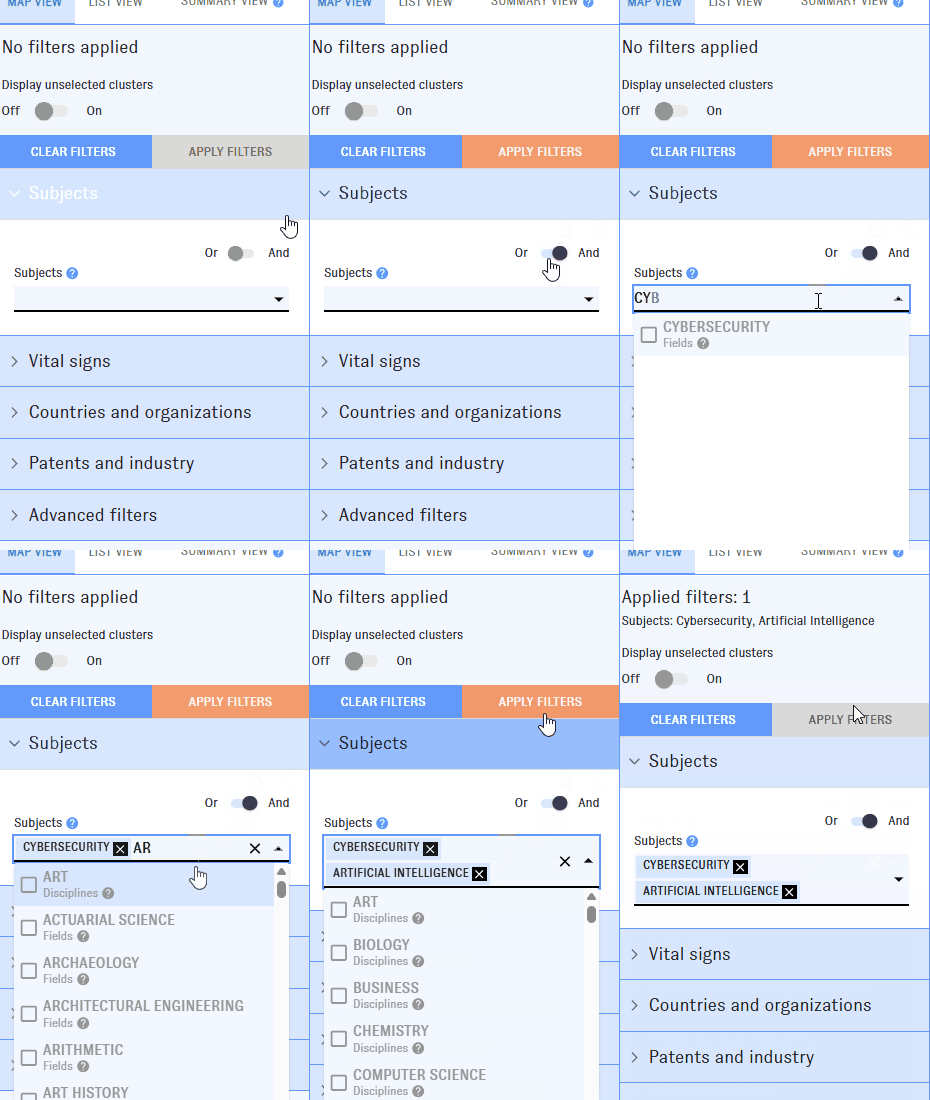
This leaves us with 84 clusters. Next, we filter for research clusters with the following traits:
- At least 1000 new articles in the last five years. (You could experiment with different thresholds on this filter. This is a relatively strict threshold.)
- Growth rating of 90 or higher - i.e., over the past three years, these clusters saw a bigger surge in articles than at least 90% of other clusters. (This is, also, a strict threshold. You can lower this to include more clusters.)
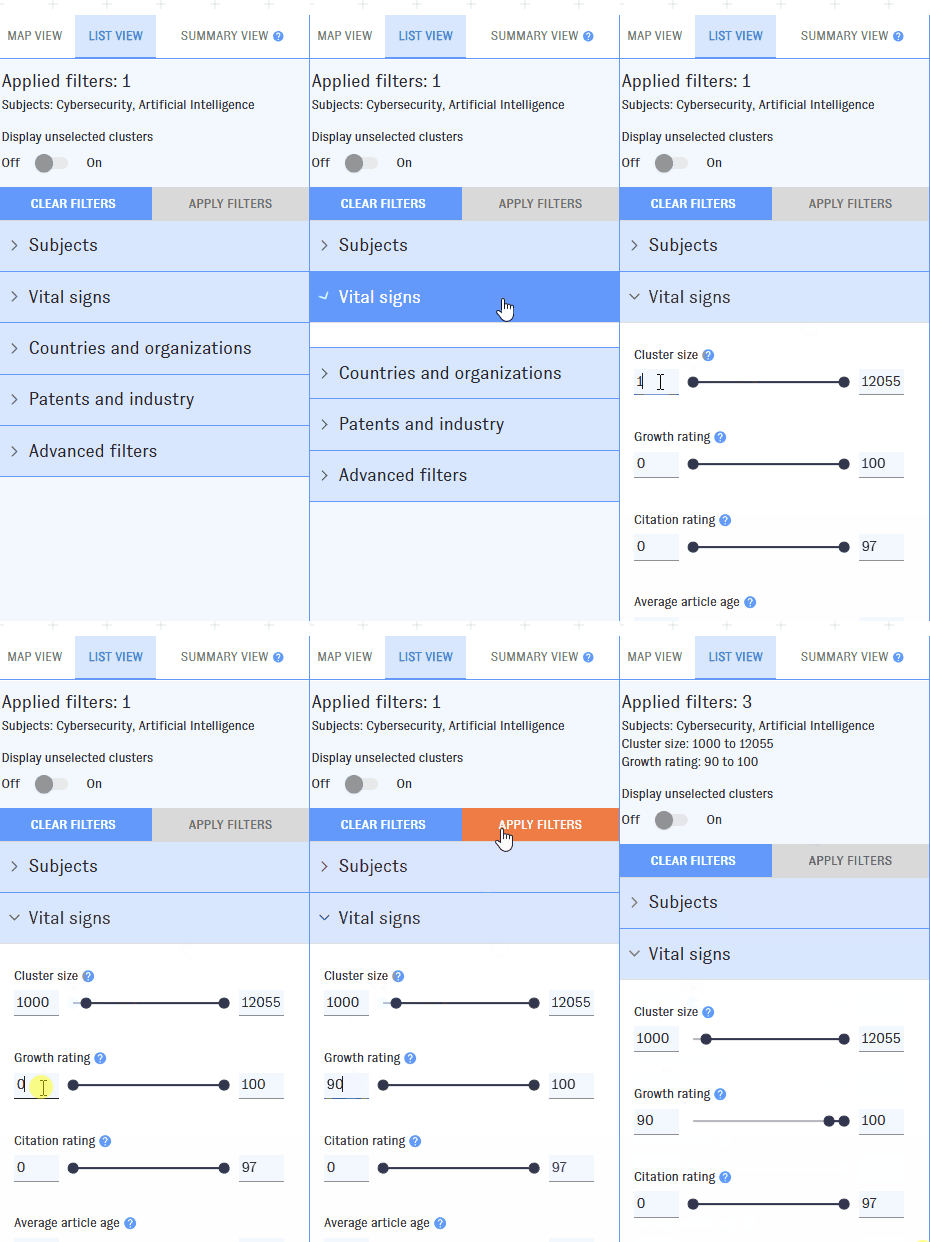
Our search query pinpoints 8 clusters in the Map that bear on both topics and have exceptional scale and growth.
Finally, let's view the queried clusters in list view.
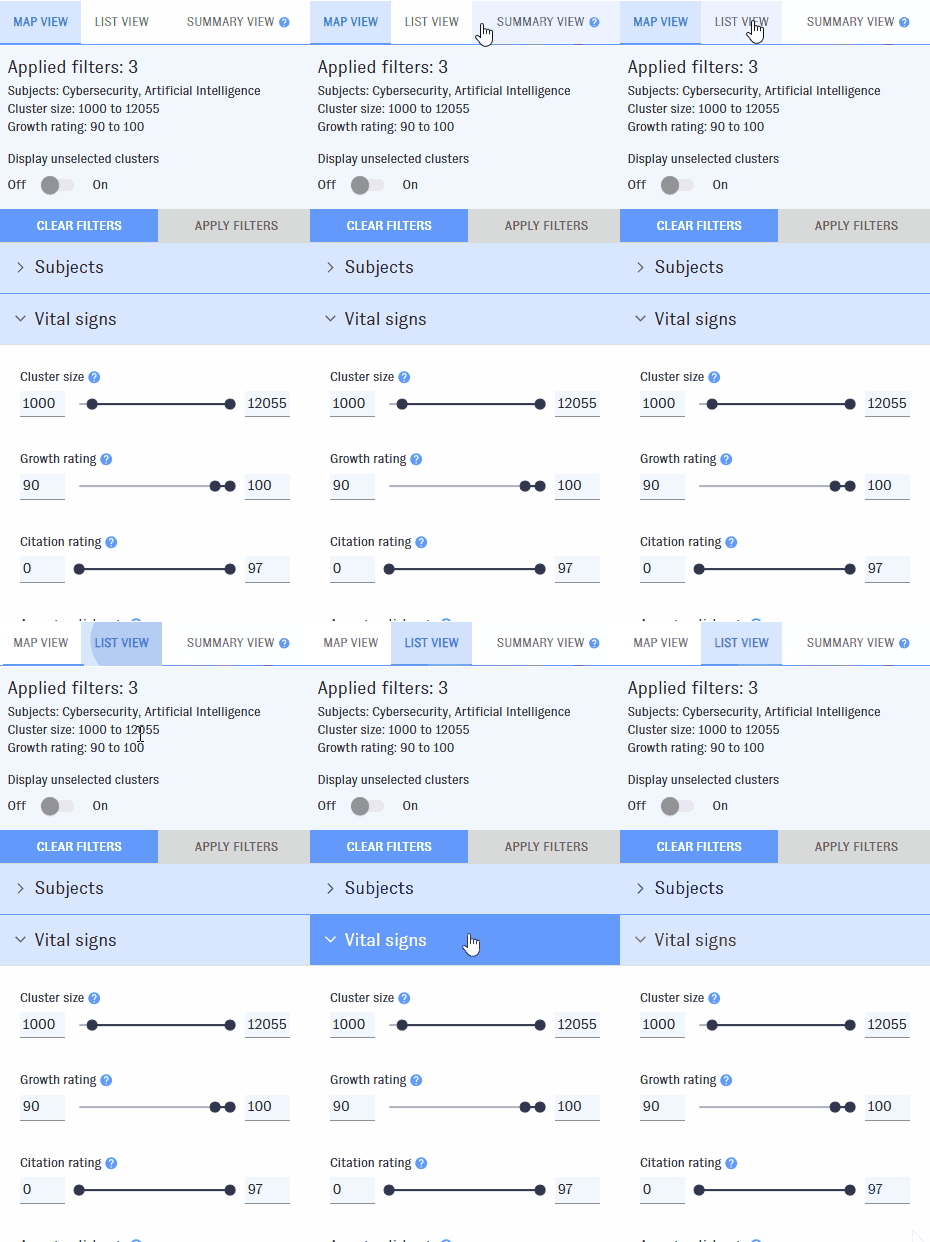
We are now able to quickly glean information about the cluster simply by looking at the cluster titles and summaries.
Just from a skim, we can spot several interesting themes emerging from our query:
- LLM security is the hottest growth area. "Security and Safety of Language Models" (Cluster 28702) has the highest growth rating at 99.97 (meaning it is among the top 50 fastest growing clusters!), and "Detection and Analysis of AI-Generated Text" (Cluster 35124) is close behind at 99.77. Both are tied to the LLM boom, and the research community is clearly racing to catch up on this field.
- AI is increasingly being applied to medical data, both to protect it ("Federated Learning for Medical Data Privacy", Cluster 25455) and to generate synthetic versions of it ("Synthetic Data Generation for Machine Learning", Cluster 33683). The latter is increasingly important because of the need for large amounts of data to train machine learning models and limitations on how much and how accessible the patient data we do have is.
- Federated learning - training a shared model across multiple decentralized entities without pooling their data - is also an extreme growth field. In particular, "Privacy and Security in Federated Learning" (Cluster 3388) is the largest cluster listed at 5020 papers published in the last five years.
The Map of Science allows us to layer different types of filters together; this means we can also filter this set of clusters for features like country affiliation. To see how this works, let's narrow our research clusters to ones where at least 10% of documents have one or more authors from a Chinese organization.
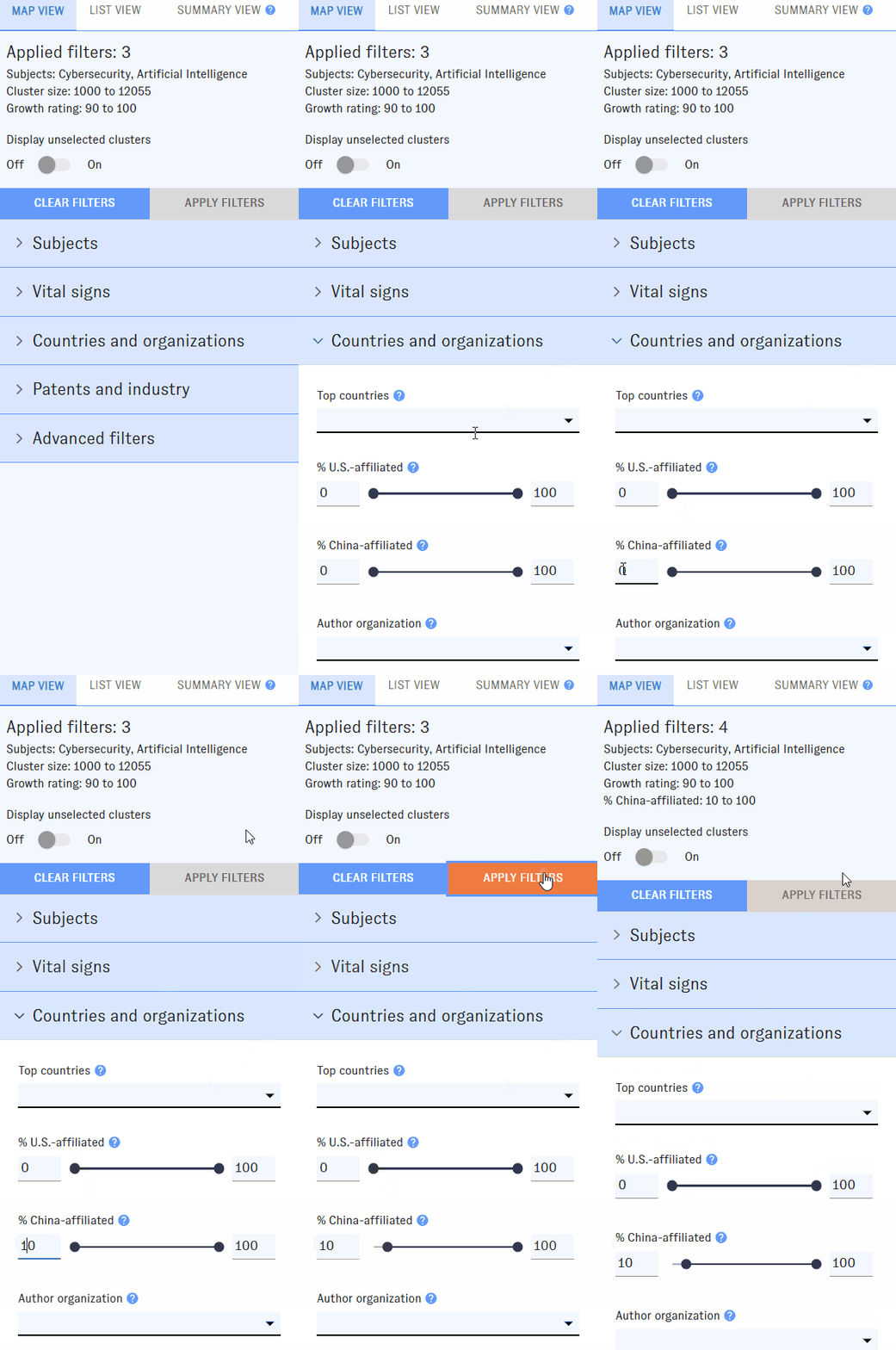
With all of our filters applied, we are left with three clusters:
Interestingly, of the three clusters remaining, two involve federated learning, demonstrating significant Chinese affiliation in this particular subfield.
We surfaced themes in the frontier of AI and cybersecurity - LLM security, federated learning, and important real-world applications. And getting to this point only took a few filter adjustments plus a skim of the cluster titles and summaries. With the Map of Science, surveying emerging technologies is easier than ever, whether you're a policy analyst, subject matter expert, or a layperson.
As next steps, you might look into particular clusters of interest - or run a similar "top clusters" analysis for the frontiers between AI and other subjects (how about AI and chemistry, AI and medicine, or AI and geology?).
As always, we're glad to help you get the most out of the Map of Science and our other resources. Visit our support hub, to contact us, book live support with an ETO staff member, or access the latest documentation for our tools and data. 🤖